Vote for your People's Award winner

This is your chance to celebrate the remarkable churches, communities, and individuals bringing hope, renewal, and positive change across our region.

Below, you’ll find inspiring stories of transformation, from bold acts of generosity, to revitalised buildings, and growing discipleship. Take a moment to explore the finalists, be inspired by the impact they’re making, and cast your vote for the project you believe deserves the first ever People’s Award.

Your voice helps spotlight the work that’s making a real difference. Thank you for being part of the celebration!

Cast your vote by 31st March

Voting closes at 11.59pm on 31st March. Vote now before you miss your chance!

The nominees
All Saints Church, Lydiard Millicent

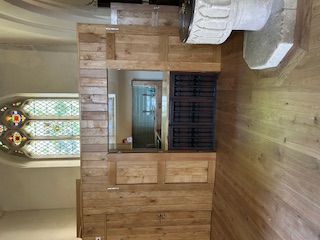
The project at All Saints centred on transforming the church into a lighter, more flexible and welcoming space for both worship and community use. Works included repairing the nave roof, removing pews and carpeting in the south aisle, installing new wooden flooring, creating a kitchen and an accessible WC, adding a new glass entrance door, restoring the organ, installing wooden chairs and infrared heating, improving the vestry flooring and completing a full declutter and deep clean. The aim was to strengthen community connections and create a building that can confidently host worship, youth work, gatherings and local events. The resulting space now supports talks, quizzes, concerts, film nights and vibrant weekly ministry.

"The church reordering has breathed new life into the building. People just don’t want to go home after Sunday morning service. The youth group love the space, and we have seen lots of new faces throughout the week and at our new monthly community events."

Church door with ancient wooden frame and modern glass insert with etched pattern accessible toilet with grey station tiles View of church with new wooden flooring and tables Wooden panelled room with barn doors, housing kitchen units and sink.

Holy Rood, Rodbourne

This project focused on bringing water into the church building, installing a simple hand‑built kitchen in the vestry, and creating a new community space through the removal of pews at the back of the church. Work also included improving storage in the vestry, rerouting the tower access hatch, and laying water, drainage and electrical services with minimal impact on the church fabric. The restored panelling and refreshed space now support growing community engagement. The transformed area is already hosting coffee mornings, seasonal events and after‑service hospitality, strengthening relationships within the village and church community.

“We now have our ‘community space’ and have certainly made use of the kitchen since the work was completed. This space has greatly improved our mission with the community and encouraged many people to visit our church and become part of our ‘family’.”


Holy Trinity, Horfield

Holy Trinity’s project replaced an old and unsafe path with a new, durable and accessible route linking the south‑east side of the church with the south‑west car park. The previous path had become hazardous, with several near misses involving wheelchair users, elderly parishioners and funeral processions. After careful consideration, the PCC chose a new path built in pennant stone: sustainable, long‑lasting and sympathetic to the Grade II* listed church. The new path now provides safe access for all and enhances the experience of the many people who use the church grounds daily.

"The resulting path is both practical and aesthetically pleasing and has been universally welcomed by the gathered community and the wider community who use it daily. We received a message saying that "the new path is fantastic: it has enabled me and my husband, who is a wheelchair user, to come to church again. Thank you.""


St Philip and St James, Neston

In autumn 2024, the PCC decided to transition from a gas‑fired wet heating system to a fully electric heating solution to improve comfort, efficiency and carbon emissions. The project required significant electrical upgrades, including a move from single‑phase to three‑phase power and a new consumer board and heating control panel. The installation includes sixty under‑pew heaters in the nave, heaters in the sanctuary and organist’s area, infrared wall heaters in the chancel and panel heaters throughout ancillary rooms. The new system is tidy, efficient and offers near‑zero carbon output.

“The electric heating transition has improved the experience of visiting the church for worship and social/cultural events. The congregation is now benefiting from a warmer environment. The heating system is efficient, neat, cost effective and the church has cut its carbon emissions to virtually zero.”


St Peter’s, Filton

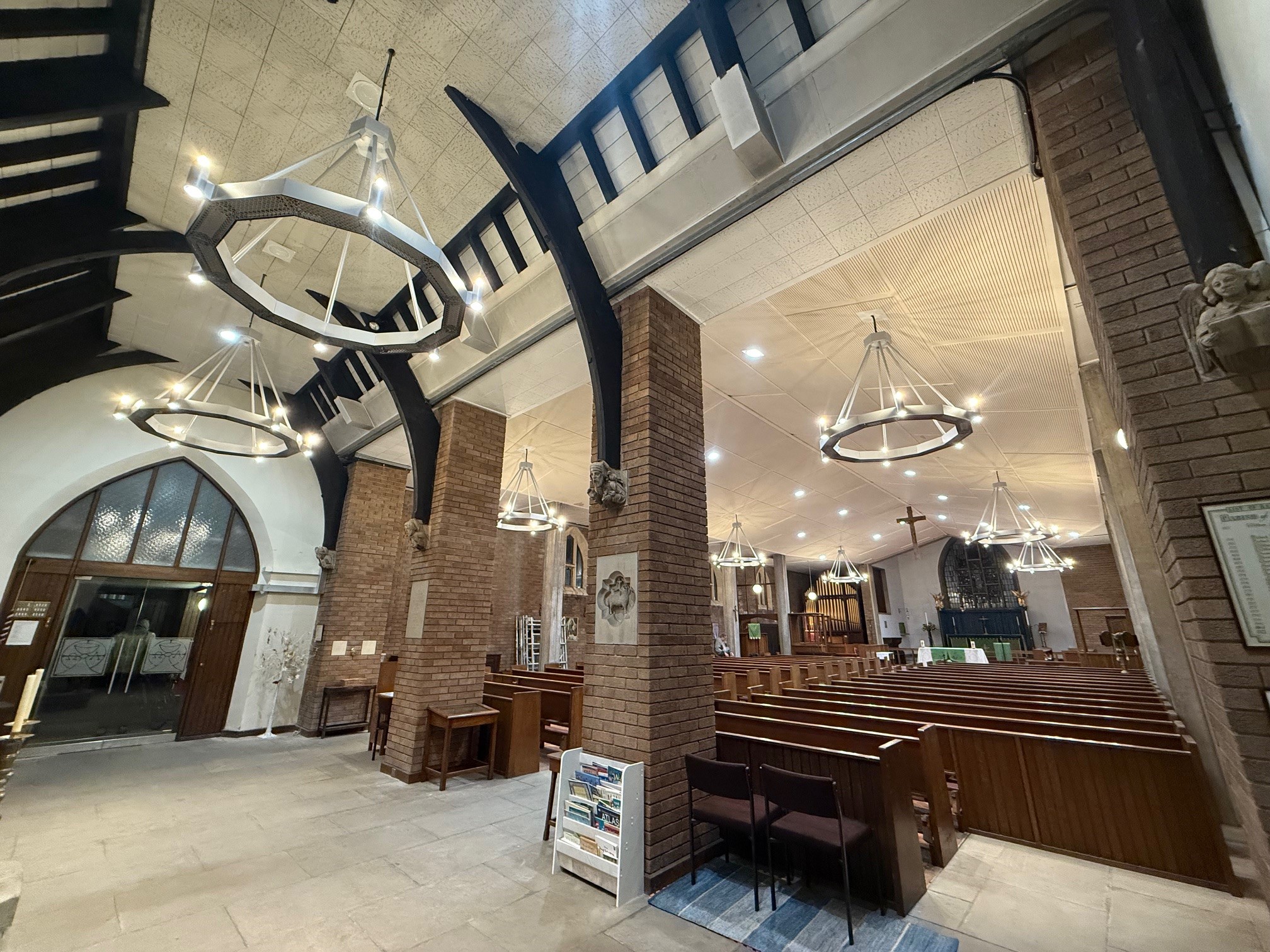
St Peter’s undertook a major heating system installation, providing effective heating for the first time in many years and taking a significant step toward Net Zero Carbon. The works upgraded heating in the Coffee Shop, Lady Chapel, Baptistery and Nave. Funding came from the West of England Combined Authority, the Garfield Weston Foundation and the Diocese of Bristol, covering around 50% of costs, with the remainder raised through parish fundraising events. The installation includes eight Halo heaters in the Nave, suspended from the concrete roof space, and nine Summit heaters between the Lady Chapel and Coffee Shop. The system was blessed on the Feast of All Saints and commissioned for winter use.

“This project has provided the church with an effective heating system for the first time in many years and represents a significant step towards achieving Net Zero Carbon emissions.”

Halo Infrared Heating System Halo Infrared Heating Candelier above Pews Halo Infrared Heating Installation

St Giles, Stanton St Quintin

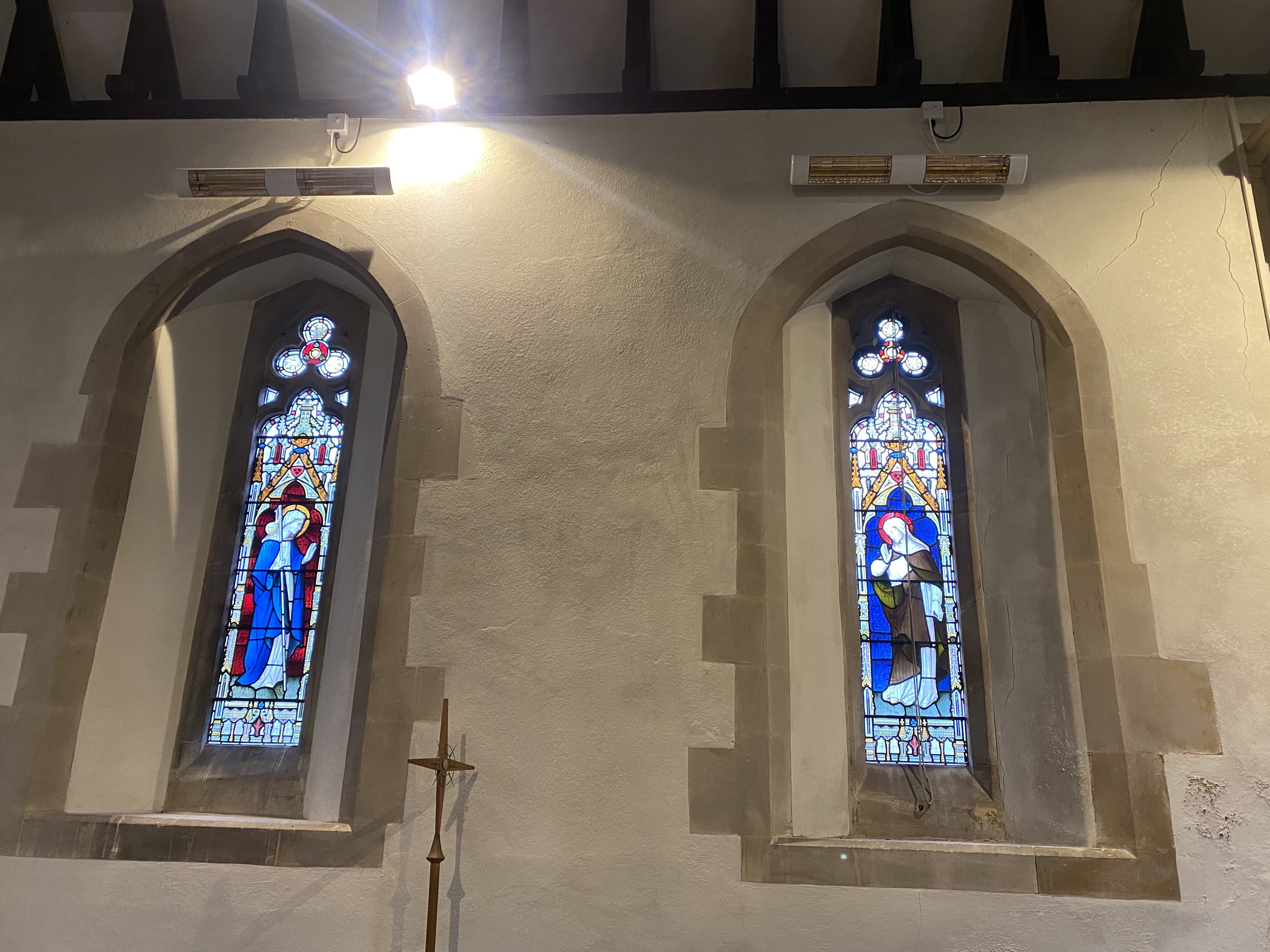
St Giles installed a new stained‑glass window, gifted anonymously in memory of “those who have gone before us”, which represents the generations who sustained worship in the church over centuries. The window’s central focus is the Tree of Life (Revelation 22:1–2), framed by a vesica piscis symbol and twelve intersecting discs representing the fruits of the tree. The design incorporates Christian symbolism including the Pisces constellation, lilies of the field (Luke 12:27) and vines referencing John 15:5. The congregation has welcomed the window with joy, noting the way its colours move beautifully around the church throughout the day.

“The stunning colours reflect the glory of God… The PCC has recorded their grateful thanks for this beautiful addition to Stanton St Quintin Church.”


Powered by Church Edit